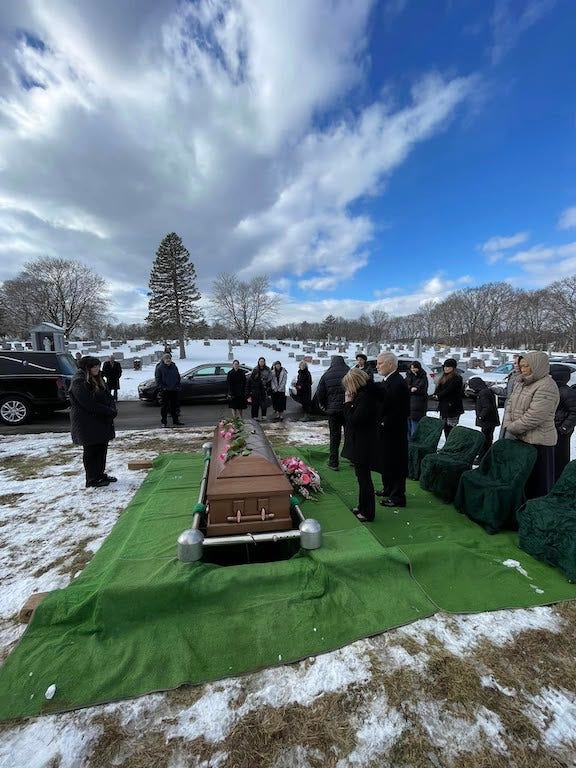
[My grandmother, Alice Pinto, died on January 31st at the age of 96. Below is the eulogy I delivered at her funeral on February 10th. PW]
About thirty years ago a magazine published an article titled “How the world lost its story.” The author, a great theologian, described a postmodern world “that has no story and so cannot entertain promises.” It was, he said, a place of nihilism, reality “by negation,” populated by Friedrich Nietzsche’s “last man.” That is, hollow folk “who simply do not apprehend or inhabit a narrative world.” Who live in a world “in which no stories can be true.”
Well. If you had Alice Pinto as your grandmother, you lived in a world that never lost its story.
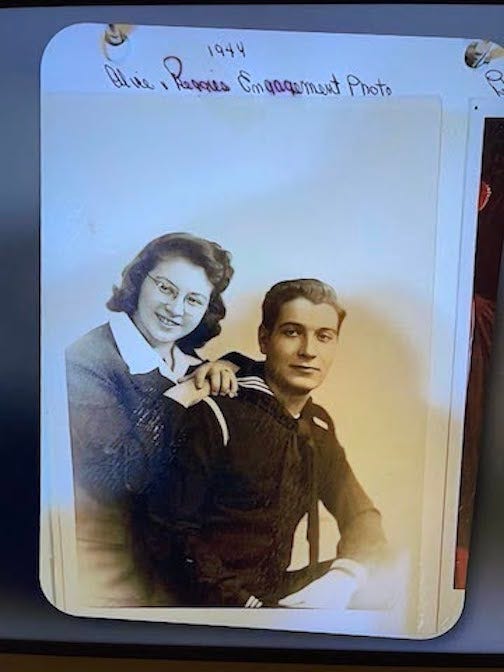
My grandmother was born into a tightknit Portuguese-American community in New Bedford, MA in 1928. She met a dashing young immigrant from Portugal, Reginald Pinto, who served his adopted country as a sailor aboard the U.S.S. Schmidt during the Second World War. They were married in 1944, when she was 16 and he was 18, and stayed married for 67 years, until Reggie’s death in 2011.
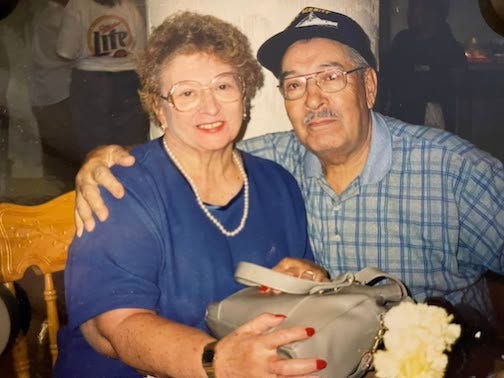
They had two children, a son, Ronald Pinto, who served his country in Vietnam, and my mother, Maria Rawlinson, through whom my grandmother has 14 living descendants today. Actually, 15 living descendants, when you include my mom. And my grandmother got to meet her great-great-granddaughter Hazel, six months before her death. Can you imagine? My grandmother got to hold her grandchild’s grandchild on her lap. Who gets to do that? What a gift.
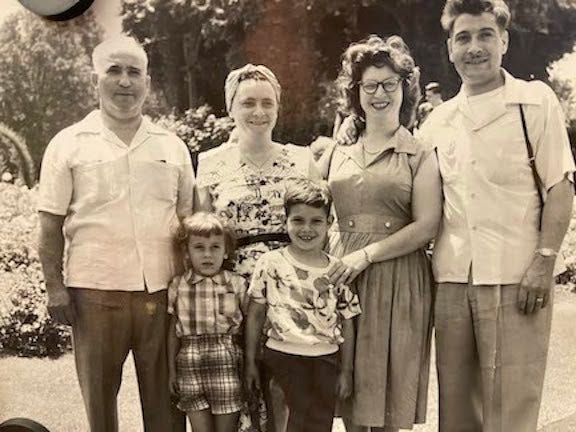
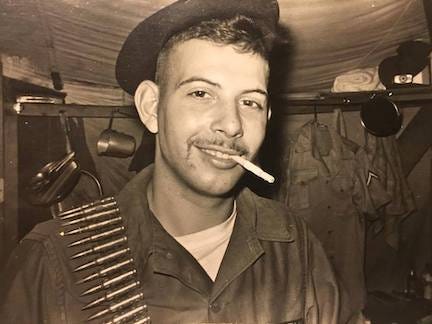
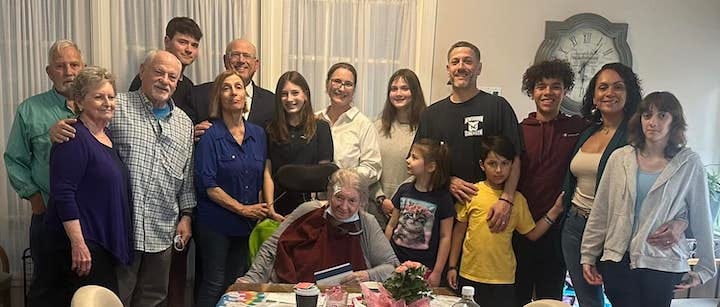
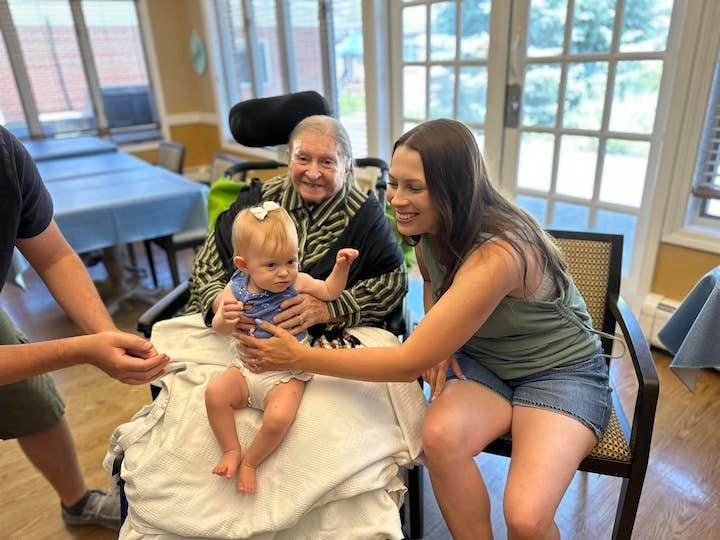
My grandparents moved to Manchester, CT in 1951 and lived there until their deaths. That is one of the things that I am having trouble getting my mind around with her passing. For the first time in almost 75 years, I have no living relative in the city of my own birth. But again, what a gift. There are not many people old enough to have heard the breaking news on the radio of the Japanese attack on Pearl Harbor who then went on to live all the way to the end of the first quarter of the 21st century. But my grandmother did.
My grandparents were part of the 20th century’s “greatest generation.” Survivors of the Great Depression, heroes of the Second World War. They had the good fortune to begin their family at the start of “the American century,” a time when they could buy a house on my grandfather’s modest newspaper photographer’s salary, provide for their family, and, with the added support of part-time work by my grandmother, see the country, and Europe and South America.
This was an era—the mid 20th century—when to be both Catholic and American was to be on top of the world. Bishop Fulton Sheen on your television set, President John F. Kennedy in the Oval Office, the Second Vatican Council meeting in Rome. Think of the America that you see in old Frank Capra movies like “It’s a Wonderful Life.” Every era has its flaws, to be sure. But the goodness of this particular era, the virtues of this brief synthesis of God and country, is something my grandparents carried with them to the end of their lives.
Being born in 1969, I just barely missed this era. In fact, even the more complicated late 20th century America that I did share with my grandparents—less a John Ford movie and more a Martin Scorsese one—is fading from view. But I benefited greatly from my grandparents’ cultural memory of that earlier time, the ways of looking at the world that they passed on to me.
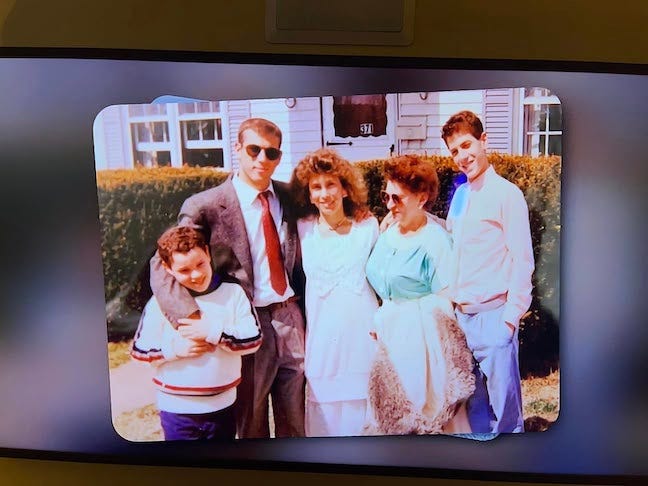
I remember the long rides to their cottage in Woodstock in their 1970s Wagoneer. The songs my grandmother would teach me to sing on the way. “There’s a hole in the bucket, dear Liza, dear Liza, a hole in the bucket, dear Liza, a hole.” Or “Yes, we have no bananas, we have no bananas today.” Or “Buffalo gals won't you come out tonight, Come out tonight, come out tonight, Buffalo gals won't you come out tonight. And dance by the light of the moon.” She carried these tunes with her for the rest of her life. She had one just for my brother, Erik. “I love myself I think I'm grand, I love to sit & hold my hand.” Erik will have to explain that one.
I remember the visits to their house when I was a child. How happy and upbeat they always were. Always reading the newspaper or watching the news. My grandmother making me listen for the singing birds. The record player. Her love for Tigger, the character from Winnie the Pooh. The organ on which she tried to teach me. The time she brought all her CCD students over to sing Christmas carols on that organ.
The classical concerts to which she brought me. The trips to New York City to see art museums and to see the Rockettes perform. The many showings of the Nutcracker. The visit to Boston to see Pope St. John Paul II in 1979. The books, so many books, in every room of her home. Those plates on the wall with images of the Ten Commandments. That painting in the dining room with the praying hands.
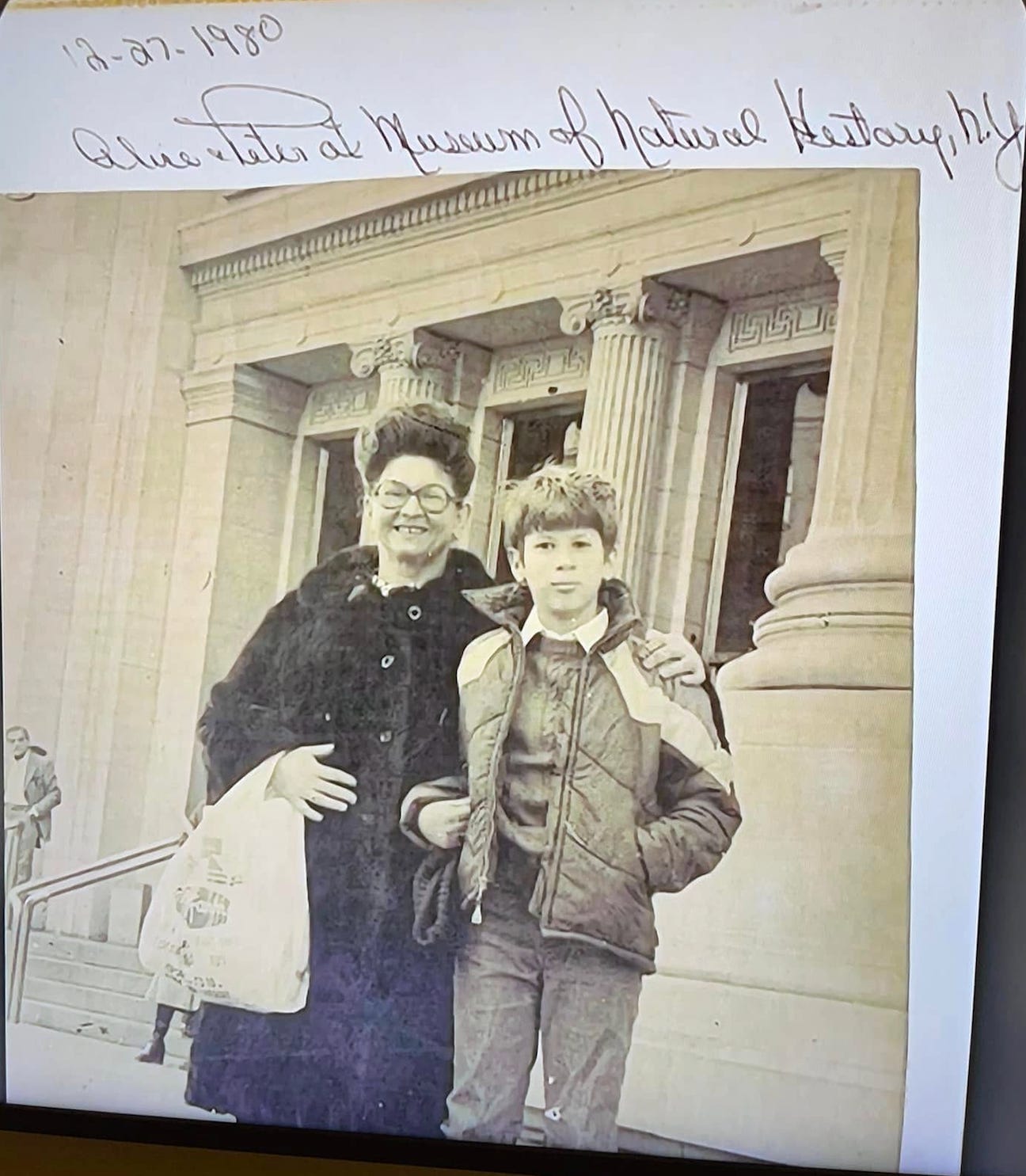
Most of all, though, what I remember about my grandmother is that she was the one who taught me about God. I can remember her telling me about him when I was three years old. She taught me how to pray. The Our Father, the Hail Mary, the Fatima prayers, the rosary. She and my grandfather took us to Portugal. To Fatima.
And the Bible. Oh, did she teach me the Bible. When we pray the Nicene Creed at Mass, it’s like a refresher of everything my grandmother read to me from the Bible. God the “maker of heaven and earth,” the Lord Jesus Christ, the Virgin Mary, Pontius Pilate, the Scriptures, the Holy Spirit, the prophets, the world to come. It was my grandmother who instilled in me a reverence for the Passion of Christ by taking me to the Stations of the Cross. It was she who first took me to get ashes on Ash Wednesday and who explained what it all meant—where we came from and where we were going.
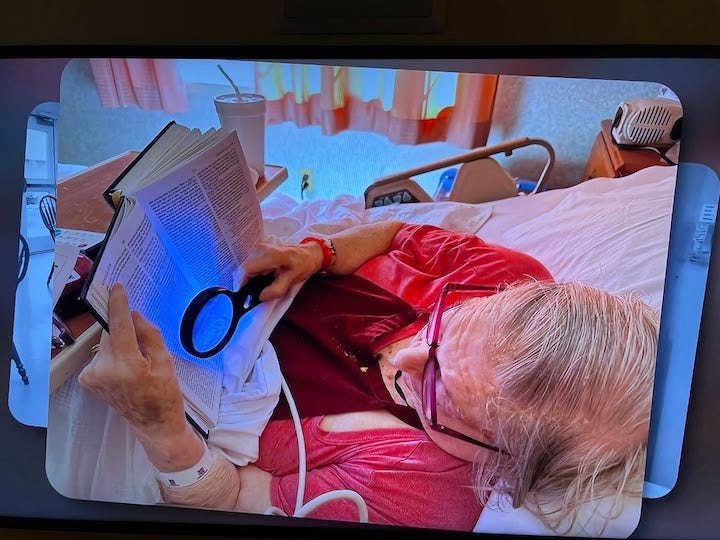
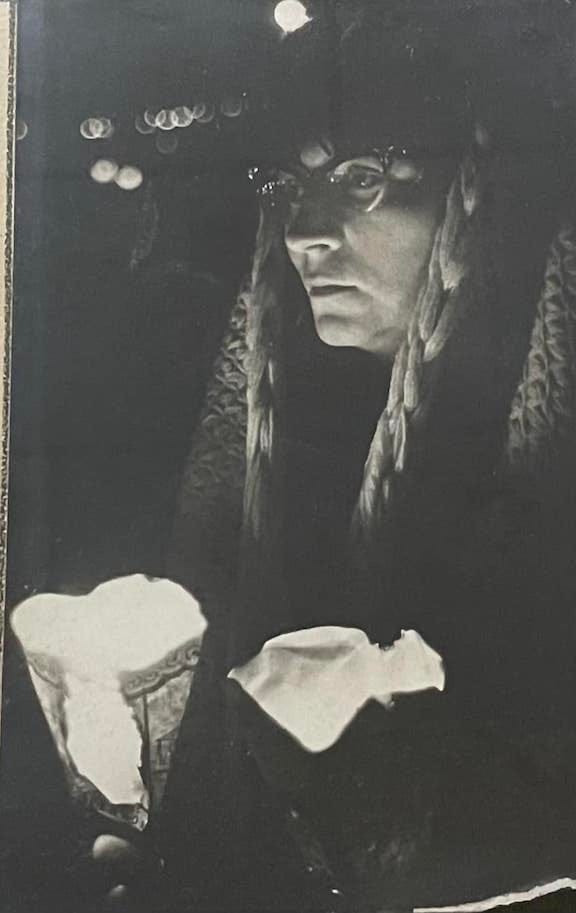
Those who do not share our faith may have seen my grandmother as odd. She did not have worldly power. But she had wisdom. She knew where to focus her efforts—on her family and the people around her, and on Jesus first of all. Always praying for us.
It is thanks to my grandmother than my world never lost its story. Here at the first quarter of the 21st century we live in an era sometimes described as “liquid modernity.” No one knows who they are anymore. People are searching for a solid place to stand, a sense of identity, of belonging, answers to the most basic questions of human existence: “Who am I? Why am I here? Where am I going?”
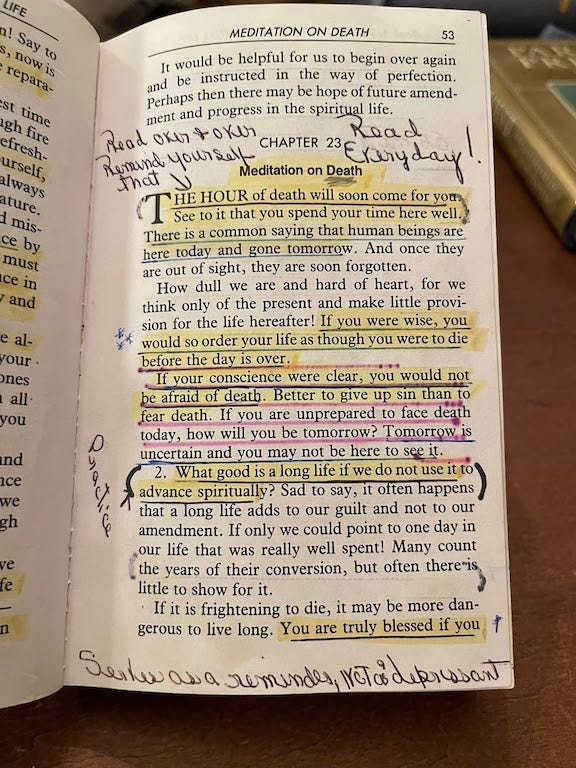
Thanks to my Bible-reading, Jesus-loving grandmother, I never had that angst. We were always grounded, rooted, in “the story of creation and redemption by the God of Israel and the Father of the risen Christ.”
May the Blessed Virgin Mary, to whom my grandmother was so deeply devoted, guide her faithful daughter home to her divine Son.